
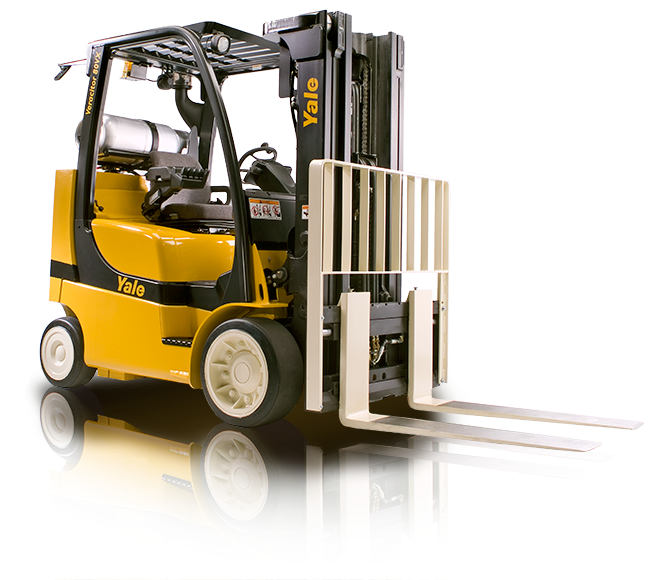
Drive
Fuel System
The LPG engine uses a vaporizer/regulator to convert the fuel from a liquid to a gas for combustion. The Engine Control Unit electronically regulates the fuel, air, and spark advance to provide the necessary torque. The engine control unit’s inputs include manifold air pressure, manifold air temperature, engine coolant temperature, accelerator pedal position, throttle position, engine speed, cam signal, and oxygen sensor signal. The system is designed to allow heavy petroleum deposits such as polypropylene or “tar” to pass through the system.
Transmissions
There are four powertrain configurations available that will handle a wide variety of material handling applications. Both One and Two Speed Electronic Powershift Transmissions feature standard wet disc brakes (requires no adjustment), electric shift control, neutral start switch, and anti-restart protection. A single pedal controls both inching and braking. Optional dual inch/brake pedals are available for operators who prefer this design. A 100 mesh suction and 10 micron return line filtration protect the transmission from abrasive contaminants.
Wet Disc Brakes
All models come standard with wet disc brakes, providing excellent stopping power with an extremely long service life. The brake system is contained within the axle for protection from wet or dirty environments. The force cooled system is designed to handle continuous, high load, high cycle applications with lots of braking events and in the worst conditions. The open brake design avoids system damage caused by material being wrapped around the axle. The brake system oil is circulated through the brake, then cooled to maintain temperature within the system. The brake temperature sensing system adjusts brake performance if brake temperatures reach higher levels. The brake system is hydraulically boosted to minimize pedal effort. The independent, hand-adjustable parking brake with push-button release has an audible alarm to address when the operator has left the truck without applying the parking brake.
Hydraulic Power Steering
Hydrostatic steering provides low-effort, responsive control and eliminates mechanical linkages for reduced surface shock and simplified maintenance. The steering wheel is 12 inches in diameter with a textured surface grip and spinner knob, and requires only four turns lock-to-lock. The center mounted steer cylinder is located within the confines of the steer axle for protection.
The Hydraulic System
Incorporates two hydraulic tanks that provide additional cooling of the hydraulic system. The hydraulic tanks are integrated into the frame. An emergency lowering valve is provided to allow the load to be lowered in the event of power loss. O-ring face seal fittings are used in all high pressure hydraulic connections. Oil is double filtered through a 100 mesh suction line strainer and 10 micron return line filter.
Optional Hydraulic System
The optional on-demand hydraulic system features a variable displacement pump, reducing heat load into the hydraulic system and improving fuel economy. The drivetrain runs cooler, thereby extending the life of the hydraulic components. The system helps minimize engine power consumed, which can result in greater fuel economy and reduced system temperatures.








.jpg)