
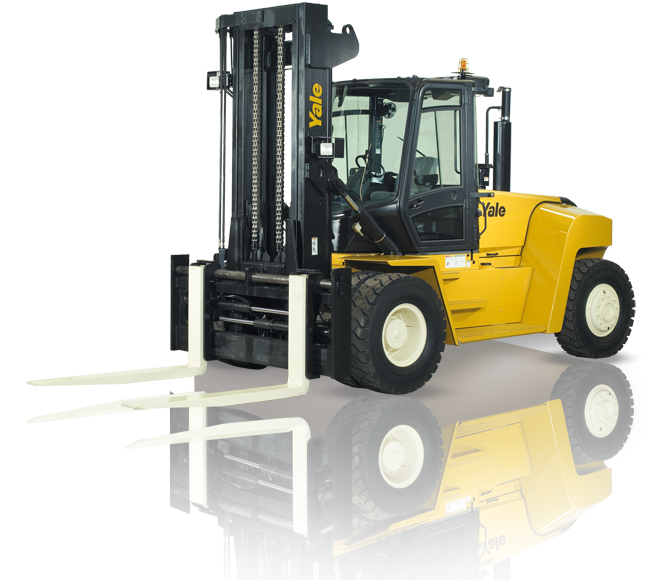


Drive
Diesel Engines
The Yale Veracitor Cummins QSB3.3L diesel turbo charged engine features legendary Cummins reliability and Tier III emission compliance. The turbocharger uses the energy of the exhaust system to compress the intake air, increasing air density and allowing a more complete combustion of the fuel, which provides higher power. The engine also features exceptionally low noise levels, a forged steel crankshaft, camshaft, con rods, and oil-cooled forged aluminium pistons. The cast iron block is designed to increase rigidity and resist torsional stresses.
Fuel System
The Cummins QSB3.3L turbocharged diesel engine incorporates a “High Pressure Common Rail” (HPCR) fuel system with full electronic control. The engine control module monitors critical engine operating parameters, accelerator throttle position, and Vehicle System Manager messages, while adjusting engine fuel as necessary to achieve the required engine speed and torque output. Solenoid actuated injection nozzles, a full suite of sensors, and full electronic engine control maximize engine performance while reducing engine noise and emissions. Additionally, the GM LPG engine uses a mixer system that employs a vaporizer built into the electronic pressure regulator to convert the fuel from a liquid to a gas, precisely delivering the proper amount to the mixer. An electronic throttle body regulates the fuel/air mixture to the intake manifold, while the Engine Control Unit manages the electronic throttle body, electronic pressure regulator, and spark advance to provide the necessary torque. The Engine Control Unit’s inputs include manifold absolute pressure, intake air temperature, engine coolant temperature, engine oil pressure, accelerator pedal position, throttle position, engine speed, camshaft position, plus pre and post catalyst oxygen sensor signals.
LPG Engines
The Yale Veracitor VX GM Vortec™ V8 engine features a rigid cast iron block and main bearing caps. The nodular iron crankshaft is supported on four main bearings with a cast iron camshaft. Hydraulic valve lifters are utilized to eliminate the need for manual adjustment, and the GM engines also feature an electronic throttle for precise performance and control.
Controlled Power Reversal (CPR)
Tyre spin is significantly reduced by precisely regulating engine speed during full power reversal situations, which proportionally decreases tyre wear and reduces the number of replacement tyres required.
Cooling System
The modular radiator system incorporates sections for engine coolant, transmission oil, and engine intake air. A 500mm diameter blade pusher-type fan provides cooling airflow, while a permanently lubricated water pump and a high capacity, cross-flow radiator ensure rapid heat dissipation. The sealed cooling system operates at a pressure of 1.0 bar and includes a coolant recovery tank for visual inspection of coolant level. The radiator is soft-mounted for durability.
Steering
Hydraulic Power Steering (hydrostatic steering) provides responsive control and eliminates mechanical linkages for reduced surface shock and simplified maintenance. The steering wheel is 30cm in diameter with a textured surface grip and spinner knob, requiring only four turns lock-to-lock. The center mounted steer cylinder is located within the confines of the steer axle for protection.
Steer Axle
The steer axle is constructed of cast ductile steel and is mounted on phenolic bushings, allowing excellent stability and axle articulation. The steer axle system features tapered spindle bearings and a non-adjustable tie rod end for durability.
Hydraulic System
The hydraulic system incorporates a gear type pump with a cast iron body for quiet efficiency. The system is protected from overloads by a main relief valve for the lift circuit and a secondary relief valve for tilt and auxiliary functions. Oil is double filtered through a 100 mesh suction line strainer and a 10 micron return line filter. The hydraulic tank is integrated into the frame, and an emergency lowering valve is provided to allow the load to be lowered in the event of power loss. O-ring face seal fittings are used in all high pressure hydraulic connections.




.jpg)





.jpg)