Manual greasing for hammers without AUTOLUBE system. The hammer must be in a vertical position with downforce applied to push the tool (HH) all the way in. This prevents grease from entering the piston impact area. Turn the machine off. Grease the hammer until grease begins to come out around the tool and lower bushing.
Autolube grease line pre-filling
It is mandatory that the supply line from the Autolube main pump to the connection on the hammer is primed with grease before it is used. Failure to do this will result in no grease being administered to the hammer tool for two to three hours. This can and will result in severe galling of the tool and tool bushing.
Preload the tool before starting
Press the tip of the demolition tool vertically against the object to be broken. Be sure the object is stable before activating the NPK HYDRAULIC HAMMER.
Apply downforce on the tool
Raise the front of the machine slightly by applying downforce on the demolition tool. Press the control lever or the foot pedal to start the NPK HYDRAULIC HAMMER. Applying excessive force to the hammer will raise the carrier too high and jolt the operator when the material breaks. Let the NPK HYDRAULIC HAMMER do the work.
Avoid blank hammering
As soon as the material is broken, release the control lever or pedal to prevent unnecessary blank hammering. Blank hammering is continued hammer operation after the material is broken. This will overheat the hydraulic system and cause undue wear.
Do not slant hammer
For the most efficient demolition, align the direction of force from the boom with the penetration direction of the tool. Failure to do this decreases the transfer of energy from the piston to the rock and increases the bending forces at the fulcrum of the tool. This unnecessary added stress leads to the following problems: Premature bushing wear and/or tool breakage. Breakage of tie rods. Breakage of bracket bolts. Decrease in transfer of energy translates to reduced production. When the tool binds from incorrect working angle, the sound of the hammer changes.
Keep the boom direction of force
Keep the boom direction of force in the same direction the tool is penetrating. Use the boom cylinder to preload the hammer (apply downforce), and use the bucket and stick cylinders for alignment. Keep the tool tangent to the arc of the boom.
Do not use the hammer tool as a pry bar
Excessive prying can cause premature bushing wear and tool or tie rod breakage. When hammering materials that allow the tool to penetrate before breaking, move the hammer slightly fore and aft to create a cone-shaped hole. The vented hole allows trapped dust and heat to escape, increases the tool penetration rate into the material, and prevents overheating the tool tip.
Do not hammer continuously in the same position for more than 30 seconds
If the tool cannot break or penetrate into the material after hammering in the same position for 30 seconds, change the working location. Hammering in the same position for a long time will reduce the working efficiency, increase the hydraulic oil temperature, overheat the tool tip and accelerate tool wear.
Maximum tool to tool bushing clearance
Replace the tool bushing, and/or tool, when the tool to bushing gap reaches the maximum clearance. Measure the tool to bushing gap with the hammer horizontal, as illustrated below. If the clearance is at or greater than the charted maximum clearance, consult the NPK Hydraulic Hammer Service Manual to determine which component requires replacement.
Storage of hydraulic hammer
For short term storage between jobs, place the hammer horizontal on wood blocks. Be sure the tool is liberally greased and the hydraulic hoses are capped. Cover with a waterproof tarp.If the NPK HYDRAULIC HAMMER is not to be used for a long period of time (months), the following storage procedure is recommended:Discharge the gas pressure.Remove the Tool and push the Piston all the way in.Grease the exposed end of the Piston (N).Grease and reinstall the Tool (HH).Plug the hydraulic hoses (AO).Cover with a waterproof tarp (t21).Set the hammer on wood blocks (t20).
Operating cycle
Hammer lines
Typically, the pressure line is arranged on the left side of the boom and the return line on the right side. Flow to the hammer is controlled from an auxiliary valve on the carrier or from an NPK supplied valve. Hydraulic oil is routed back to the tank through the carrier’s oil cooler and filter.
Hammer control valve
NPK uses two general types of control systems, depending upon the carrier model:CONTROL SYSTEM USING CARRIER AUXILIARY OR SPARE VALVE SECTION. This type of installation utilizes an existing carrier valve. Any additional parts, such as a mechanical linkage, hydraulic pilot control valve, flow control valves, etc., are furnished in the NPK HYDRAULIC INSTALLATION KIT. Special hydraulic pressure control valves are not required. The NPK HYDRAULIC HAMMER operating pressure is self-regulating.CONTROL SYSTEM USING THE NPK MULTIVALVE. For carriers not equipped with a suitable auxiliary or spare valve section, the NPK HYDRAULIC INSTALLATION KIT includes a solenoid operated, priority flow control valve to operate the NPK HYDRAULIC HAMMER. The NPK MULTIVALVE is specifically designed for the operation of boom mounted attachments.
Changing the filter element and hydraulic oil
Change the filter element and hydraulic oil at the intervals described in the operation manual of the excavator when using a hydraulic implement. Another method is to set up an oil sampling schedule and change accordingly.
Hydraulic quick disconnects
NPK recommends against the use of non-NPK quick disconnects on hydraulic circuits operating NPK Products.The hydraulic pulsations caused by hydraulic hammer operating can cause internal pieces of non-NPK quick disconnects to disintegrate. These pieces would migrate into the hammer, causing damage.If quick disconnects are used when the hammer is removed from the excavator, the quick disconnects should be capped to keep them clean. If this is not done, contamination on the disconnect will be flushed into the hammer when re-connected. This, again, can cause damage.Most quick disconnects create a restriction in the circuit. NPK Hammers are not back pressure sensitive, but restrictions cause unnecessary heating of the oil. Also, the pressure required to operate the hammer, plus the restriction of the disconnects may push an older, low pressure, carrier machine to the limit of its hydraulic system. This would interfere with proper hammer operation. However, the NPK approved quick disconnects are properly sized so that the hammer operation is not affected.
Hammers that are new, rebuilt, or have been inactive
Before using a new hammer for the first time, the first time after rebuild, or a hammer that has been inactive for a long period of time: Check the nitrogen gas pressure. The nitrogen gas pre-charge is factory checked before shipment. However, it is recommended the pressure be checked before using the NPK hydraulic hammer for the first time. See CHECKING THE GAS PRESSURE section for procedure. At idle, raise the hammer off of the ground. Place hammer vertical and activate the hammer circuit for 3 – 5 second intervals. Continue for an additional 3 – 4 times to ensure that all the air has been purged from the hoses and hammer before first use. Failure to do this could result in damage to internal components. Place hammer firmly against material to be broken. Operate the hammer in a vertical position for approximately 10 minutes at one-half engine speed. Increase engine speed to three-quarters and continue operating at this speed for another 10 to 20 minutes. Increase to full engine speed. Maintain vertical position for the first hour of operation.
Daily start-up procedure
Operate the NPK hydraulic hammer in the vertical position, at 1/2 engine throttle setting, for about 1-2 minutes. During this period, inspect the NPK hydraulic hammer and installation kit for leaks or loose connections.
Gas Charging Kit
All NPK hydraulic hammers are furnished with the following gas charging kit. In addition, a nitrogen tank and pressure regulator valve (not furnished with the hammer) are required. These can be obtained from your local welding supply house. A regulator valve is available from NPK.
Tools
Npk hammer grease
NPK now offers hammer grease specially formulated to meet severe job requirements. The grease is available in three different temperature ranges - 350°, 500°, and 2000°. All are compatible with Autolube systems. Universal Plus and Super Duty are lithium soap based products that resist washout and contain NPK-10 additive for surface protection in friction affected areas. Chisel Paste is an aluminum complex soap base with 12% graphite and copper additives for extreme operating conditions.
Warranties Exclusions
Misuse, abuse, alteration or improper installation. Maintenance, repair or storage which NPK judges improper. Not performing DAILY VISUAL INSPECTIONS as specified in the NPK manuals. Exceeding the tool and/or tool bushing wear limit. Underwater operation. Operation after discovery of defective or worn parts. Unreasonable delay in making a repair after being notified of a potential product problem.
Mounting
Mounting to the carrier
Place the hammer horizontal on wood blocks, as shown. Align the boom pin holes. Install the stick pin before the cylinder link pin. Clean away any dirt found on the hose connections and connect hoses. Pressure line is on left, return line on right side of boom. Open shut-off valves.
Removal from the carrier
Close pressure and return line shut-off valves. Disconnect the hydraulic hoses before laying the hammer down. Avoid getting hydraulic oil on rubber mounts. Flush with water if necessary. Cap the pressure and return lines on the carrier and connect the hammer whip hoses as shown. Position hammer horizontally on wood blocks and remove the boom pins.
Difference Between FX and FY Tools
The crosscut (FX) tool cuts at right angle, or crosswise, to the stick and boom of the excavator.
Removal
Remove the retaining ring by using pliers or screwdrivers, see Figures 1 and 2. It will easily come out if pulled at an angle as shown in Figure 2. Screw an M12 bolt or cap screw into the retainer pin. Pull out retainer pin. If the retainer pin is jammed, use a hammer and drift from the opposite side.
Tool Maintenance
If chipping (16) is found at the top of the tool, replace the tool. If neglected, the piston impact surface will be damaged. Apply silicone to the back side of the lock plates. Install the lock plates. If a lock plate does not drop into place, tighten the top nut until it does.
Machine inspection
Ask for inspection of your NPK E218 from experts
Mevas is an international operating inspection service for used heavy machinery. Construction machinery inspectors are available in more than 20 countries.
Use this service to minimise the risk when buying used equipment. An inspection by Mevas costs less than repairing a defective hydraulic cylinder.
Get spare parts for NPK E218 easily from our partners
Do your lookup for high quality parts for NPK E218 online!
With a few, easy steps, you will find generic and genuine parts and replacements in well-catalogued lists. Wether you are dealer or an owner, LECTURA can lead you to the right direction.
Check the best offers from our partners and order the Hydraulic Breakers spare parts easily today - worldwide.
In case you look into transport options for your machine, apply our services. Query the most appropriate transport quotes for Hydraulic Breakers created on transport dimensions and weights. Our partners provide large-scale services to satisfy your requirements.
STRABAG SE has today signed an agreement to acquire 100% of the shares in BAWI Construction SRL, headquartered in Bucharest. With this transaction, the Group is taking another step to strengthen its position in the European railway infrastructure business.

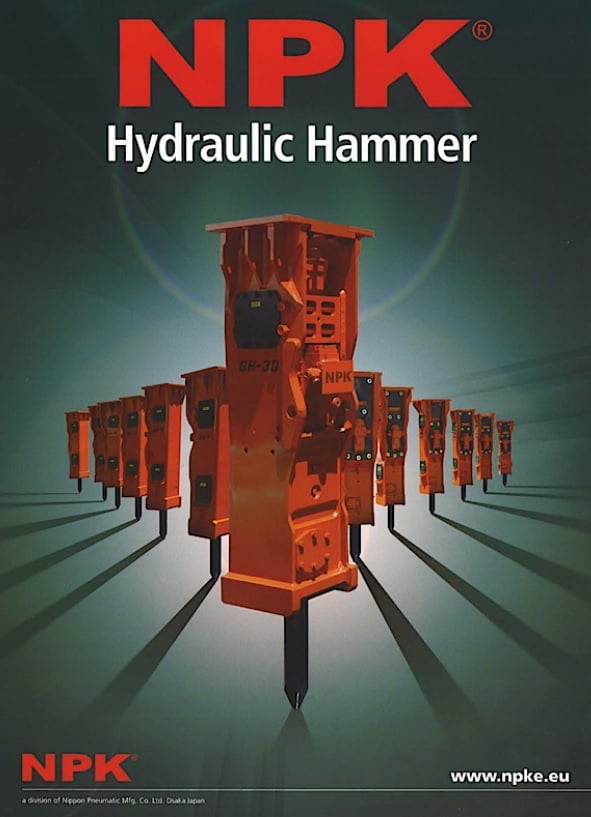


.jpg)
.jpg)


.jpg)